English


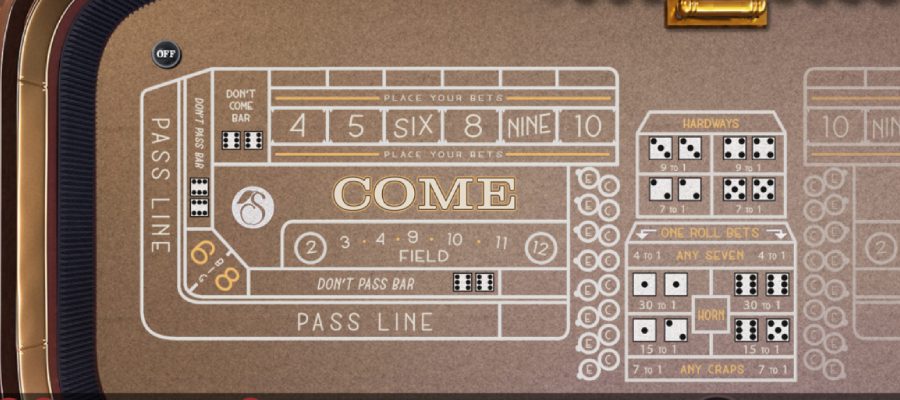
Craps has always been one of the most exciting betting games in any casino, whether you first noticed it at a crowded table or in a street game full of energy. Today, you can play craps online from home, but the same principle still applies: the more disciplined your betting strategy is, the better your chances of making smarter decisions over time.
If you want to improve your results, the goal is not to chase every flashy wager on the table. The strongest winning craps strategy usually comes from focusing on lower-house-edge bets, understanding when to add odds, and knowing which wagers to avoid. If you need a refresher before applying strategy, this how to bet on craps guide covers the main rules, table flow, and beginner-friendly bets.
The core strategy is simple: lean on Pass Line, Don’t Pass, and Odds bets, and stay cautious with high-house-edge wagers like Big 6, Big 8, hardways, and proposition bets.
Editorial Note
This content explains how craps betting strategies work, including house edge, odds bets, and common wagering mistakes. It is intended for educational purposes only and does not guarantee winning outcomes at the craps table.
Quick Answer
The best winning craps strategy focuses on low-house-edge bets like Pass Line, Don’t Pass, and Odds bets while avoiding riskier wagers such as Big 6, Big 8, hardways, and proposition bets. Taking Odds after a point is established can significantly reduce your overall disadvantage because Odds bets pay true odds and carry no house edge.
Table of Contents
- Editorial Note
- Winning Craps Strategy Starts With Low-House-Edge Bets
- Pass Line Bets Are the Classic Starting Point
- Don’t Pass Bets Flip the Table Logic
- Odds Bets Improve Your Overall Position
- Big 6 and Big 8 Are Common Traps
- Hard 4, Hard 10, and Proposition Bets Are Even Riskier
- Best Winning Craps Strategy in One Practical Approach
- FAQ
- Final Thoughts
Winning Craps Strategy Starts With Low-House-Edge Bets
The best craps strategies are built around wagers that give the casino the smallest mathematical advantage. Instead of trying to hit dramatic one-roll outcomes, smart players focus on bets that stay in action longer and offer a better balance between risk and value.
Key Insight
Main idea:
A winning craps strategy is less about chasing big payouts and more about minimizing house edge over time.
Why it matters:
Lower-edge bets preserve bankroll better and give you more staying power during a session.
Strategy Foundation
The strongest base for most players is Pass Line, Don’t Pass, and Odds bets. These wagers consistently offer better value than many of the more tempting bets spread across the table.
Pass Line Bets Are the Classic Starting Point
The simplest craps wager is the Pass Line bet. With this bet, the shooter is wagering that a 7 or 11 will be rolled on the come-out roll.
If that happens, the bet wins immediately and pays even money. If another number comes out, specifically 4, 5, 8, 9, or 10, that number becomes the point. Once a point is established, the shooter must roll that point again before rolling a 7. If a 7 appears first, the Pass Line bet loses.
The house edge on the Pass Line is only 1.41%, which is much better than many other bets available at the table. For beginners or players trying to keep risk under control, this is one of the smartest places to start.
Pass Line Basics
Wins on:
A 7 or 11 on the come-out roll, or the point repeating before a 7.
Loses on:
A 7 after the point is established and before that point is rolled again.
Visual Model
Don’t Pass Bets Flip the Table Logic
The Don’t Pass bet is the opposite of the Pass Line. Instead of hoping for a 7 or 11 on the come-out roll, you are rooting for a 2 or 3, while a 12 pushes depending on the rules used.
From a pure numbers perspective, the Don’t Pass bet is slightly stronger than the Pass Line. Its house edge is 1.36%, which makes it one of the best bets available in craps.
Even though some players avoid it because they do not like betting against the shooter, the math is clear. If your goal is efficiency rather than table sentiment, Don’t Pass deserves serious consideration.
| Bet | House Edge | Why Players Use It |
|---|---|---|
| Pass Line | 1.41% | Simple, beginner-friendly, and widely considered the classic starting bet. |
| Don’t Pass | 1.36% | Slightly better mathematically for players focused on minimizing edge. |
Quick Read
If you want the traditional experience, start with Pass Line. If you want the slightly better mathematical edge, Don’t Pass is technically stronger.
Learn the full table before adding advanced bets
Use the fundamentals first, then build strategy with stronger decision-making instead of guessing at table layouts and payouts.
Read the craps betting guideOdds Bets Improve Your Overall Position
Once a point has been established on the come-out roll, you can place an additional wager behind your Pass Line bet known as the Odds bet. This wager is usually capped at a multiple of your base bet, and that multiple varies by casino, though 2x odds is common.
The biggest advantage of the Odds bet is that it pays at true odds. That means the house edge on this part of the wager is 0%. Because of that, taking odds is widely considered one of the smartest moves you can make in craps.
When you combine a Pass Line bet with Odds, your total disadvantage falls sharply. For example, if 2x odds are allowed, the overall house edge drops to about 0.61% instead of 1.41%. The more odds a casino allows, the more your total position improves.
Why Odds Matter
House edge:
The Odds bet itself carries a 0% house edge because it pays true odds.
Strategy value:
Adding odds lowers the effective edge of your total wager and makes a strong base bet even better.
Visual Model
Big 6 and Big 8 Are Common Traps
Some online craps bets look simple, but that does not make them efficient. The Big 6 bet is a wager that a 6 will be rolled before a 7, and the Big 8 works the same way for the number 8.
Both bets carry a house edge of 9.1%, which is dramatically worse than the edge on Pass Line, Don’t Pass, or Odds bets. That makes them poor value choices for anyone trying to apply a disciplined strategy.
Avoiding Big 6 and Big 8, or using them only very sparingly, is not just conservative play. It is basic bankroll protection.
| Bet | House Edge | Strategy Takeaway |
|---|---|---|
| Big 6 | 9.1% | Much weaker than core craps bets and usually not worth the extra risk. |
| Big 8 | 9.1% | Same problem as Big 6, with poor overall value for most players. |
Hard 4, Hard 10, and Proposition Bets Are Even Riskier
Hard 4 and Hard 10 bets are even tougher to hit than Big 6 or Big 8. Both carry a house edge above 11%, which makes them very expensive wagers over time.
Another category to approach carefully is the proposition bet. At the craps table, a proposition bet usually means betting that a specific outcome will happen on the very next roll rather than over the course of a longer round.
The proposition bets on 2 or 12 are among the worst bets available, carrying a house edge of 13.9%. If your goal is to stretch your bankroll and make smarter decisions, these are the bets to avoid most aggressively.
High-Risk Bet Warning
Hard 4 and Hard 10:
These bets come with a house edge above 11%, making them difficult to justify in a value-focused strategy.
Proposition bets on 2 or 12:
These carry a 13.9% house edge and are some of the least efficient bets on the table.
Visual Model
Best Winning Craps Strategy in One Practical Approach
If you want a practical game plan, keep it simple. Start with Pass Line if you prefer the classic side of the action, or Don’t Pass if you want the slightly better math. Then, whenever a point is established and the table rules allow it, add Odds to improve your total position.
At the same time, stay disciplined about avoiding the bets that drain value from your bankroll. Big 6, Big 8, hardways, and one-roll proposition bets may look exciting, but they put you at a far greater disadvantage.
That combination of patience, lower-edge betting, and selective aggression is the closest thing craps has to a true winning strategy.
FAQ
What is the best basic bet in craps?
The Pass Line is one of the best basic bets because it is simple and carries a low 1.41% house edge. The Don’t Pass is slightly better mathematically at 1.36%.
Should you always take odds in craps?
In most cases, yes. Odds bets pay true odds and carry a 0% house edge, which helps lower the effective edge of your total wager.
What craps bets should beginners avoid?
Beginners should be very cautious with Big 6, Big 8, hardways, and proposition bets because they come with much higher house edges than the core bets.
Is Don’t Pass really better than Pass Line?
From a house-edge standpoint, yes. Don’t Pass is slightly better at 1.36%, though some players still prefer Pass Line because it aligns with the shooter and the traditional flow of the game.
Summary
- Pass Line and Don’t Pass are the strongest foundation bets for most craps strategies.
- Odds bets are crucial because they pay true odds and reduce your overall disadvantage.
- Big 6, Big 8, hardways, and proposition bets carry much worse house edges and should be limited or avoided.
Build a smarter online casino strategy
Once you understand which craps bets offer real value, you can make sharper decisions across other casino games too.
Explore the online casinoFinal Thoughts
The best winning craps strategy is not about finding a magic bet that guarantees profit. It is about giving yourself the best possible mathematical position while avoiding the wagers that quietly work against you. Keep your play centered on Pass Line, Don’t Pass, and Odds, and treat the higher-edge bets as exceptions rather than part of your regular plan.
MyBookie: Bet On Anything. Anywhere. Anytime.
MyBookie: Bet On Anything. Anywhere. Anytime.

About the Author

Henry Watkins is a Sports Writer at MyBookie. Originally from Scotland and currently residing in Metro Atlanta with his wife, Penny, Henry covers competitive and professional sports as well as the business of sports. In addition to his sports writing, he is an author of horror fiction, including Karaoke Night, Crueller, and Off The Grid.
Sportsbook Bonuses
Read requirements in the Bonus page. However, if you want to take a deep knowledge, go to MyBookie Bonus Rules and How to