English


Last updated: September 2026
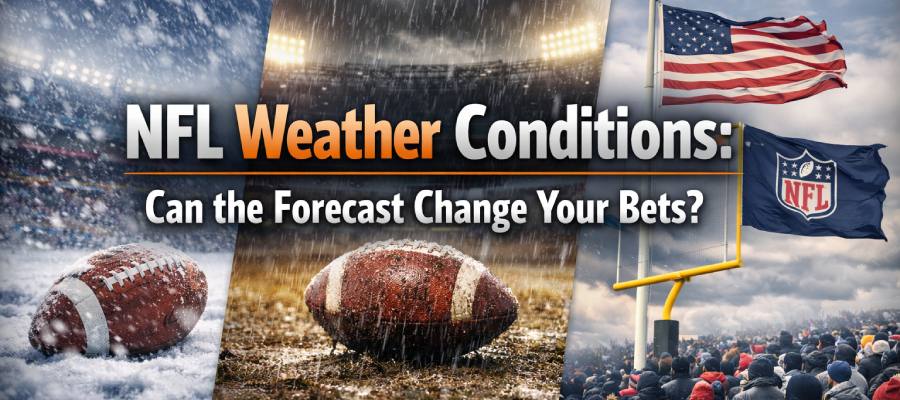
Yes, weather can impact NFL sports betting when rain, snow, wind, or extreme temperatures change how teams execute, call plays, and score. The effect is usually most noticeable in totals, passing props, kicking markets, and game-pace expectations.
Paying attention to weather isn’t about predicting chaos. It’s about identifying when the conditions meaningfully change the expected game environment. Since weather can affect everything from totals to player props, it’s worth comparing multiple sports betting markets before kickoff.
In practical terms, wind usually has the clearest betting impact, while precipitation and extreme temperatures can also affect ball security, footing, passing efficiency, and play selection. The key is determining whether the current betting line has already accounted for those conditions.
Quick Answer: NFL Weather Conditions
Yes, weather affects NFL betting markets when it changes offensive execution, coaching decisions, or scoring efficiency. Wind typically has the biggest impact, particularly on totals, passing props, and kicking markets. Rain, snow, and extreme temperatures can also matter depending on their severity and timing.
Table of Contents
- Bet Smarter by Reading the Market
- Does Weather Actually Impact NFL Sports Betting?
- How Do NFL Weather Conditions Change Game Outcomes?
- How Does Weather Affect NFL Player Performance?
- Why Do Indoor and Outdoor NFL Stadiums Matter for Betting?
- Why Is Wind the Most Important NFL Weather Variable?
- How Do Snow Games and Severe Weather Affect NFL Betting?
- What Happens When Weather Is Not a Factor?
- How Should Bettors Adjust for NFL Weather Conditions?
- Frequently Asked Questions About NFL Weather and Betting
- Final Thoughts
If you want a broader foundation, the sports betting guide covers how markets react to things like injuries, timing, and weather.
Bet Smarter by Reading the Market
Weather can shift pace, play-calling, and scoring expectations. The goal is not to “predict the storm,” but to price the impact before the market fully adjusts.
Track live lines and compare movement inside the NFL sportsbook betting markets.
Explore NFL Betting MarketsThis guide applies to regular season, playoff, and Super Bowl betting markets.
Does Weather Actually Impact NFL Sports Betting?
Some weather effects are subtle and already baked into the line.
Others show up late, after totals and props have already been posted, which creates a brief window where the numbers lag behind reality. That’s why experienced bettors treat weather as something to actually analyze, not just a storyline the broadcast keeps mentioning.
Markets tend to overreact to visible weather narratives, but not every forecast actually changes the game’s real probability. In practice, wind and heavy precipitation cause the biggest betting adjustments, since they directly hit offensive efficiency and special teams play.
You’ll see this most on nationally televised games and busy weekends, where public perception can temporarily push numbers up or down across the main NFL sportsbook betting markets.
Quick Answer
Does rain automatically mean bet the under? No. Wind usually affects totals more than light rain alone.
What weather matters most in NFL betting? Sustained wind above 20 mph typically has the largest impact.
When Weather Actually Matters in NFL Betting
🌬 Wind
Strong or gusty winds disrupt deep passing, reduce kicking accuracy, and shrink offensive playbooks.
🌧 Rain
Rain increases ball-handling errors and can lower passing efficiency before totals fully adjust.
❄ Snow
Snow slows pace and reduces explosive plays, though turnovers can still create unexpected scoring swings.
🌡 Extreme Cold
Cold affects grip, stamina, reaction time, and passing efficiency—especially for timing offenses.
How NFL Weather Conditions Affect Betting Markets
🌬 Wind
Primary impact: Passing efficiency and kicking accuracy.
Markets affected: Totals, QB props, longest FG props.
🌧 Rain
Primary impact: Ball security and footing.
Markets affected: Passing props, turnovers, rushing attempts.
❄ Snow
Primary impact: Pace and explosive plays.
Markets affected: Team totals, rushing props, unders.
🌡 Extreme Heat/Cold
Primary impact: Endurance and stamina.
Markets affected: 2nd-half scoring and tempo.
Visual Model
If you’re wondering why this matters, it’s because markets react to information rather than assumptions. When weather forces teams to abandon their preferred style of play, betting lines become more vulnerable to mispricing.
How Do NFL Weather Conditions Change Game Outcomes?
Throughout NFL history, weather conditions for NFL games have influenced outcomes by reshaping how offenses operate, how defenses tackle and pursue, and how conservative coaches become in high-leverage situations.
One of the most famous examples is the Raiders vs. Patriots AFC Divisional Playoff in January 2002—commonly remembered as the “Snow Bowl.” Played during a severe blizzard, the Patriots managed field position and ball security more effectively, ultimately winning a game that may have unfolded very differently under clear conditions.
Severe weather affecting major NFL events is not theoretical. Historical examples like the Super Bowl week snowstorm in Dallas show how extreme conditions can affect preparation, travel logistics, and betting markets.
Key Insight
⚙ Concept:
Weather changes game scripts by forcing offenses into more conservative decision-making.
Why it matters:
Lower tempo, shorter throws, and increased rushing volume directly affect totals and props.
Cold often reduces scoring efficiency, particularly for timing-based passing attacks. Rain increases fumbles and dropped passes. Snow slows defenders but also limits speed-based offensive advantages.
Wind affects kicking accuracy and deep passing. These variables change the shape of the game and directly influence spreads, totals, and live betting volatility.
From a betting perspective, games impacted by weather frequently lean toward lower scoring, increased rushing volume, fewer explosive plays, and more variance in special teams outcomes.
These conditions can become even more important during the NFL Pro Bowl betting season, where motivation, pace, and player rotation already introduce unusual volatility into the market.
These effects can become even more pronounced during NFL preseason betting, where inconsistent execution and heavy player rotation already increase unpredictability. Bettors who want to understand why exhibition games behave differently from the regular season can learn more about how NFL preseason betting works and the unique factors that influence those markets.
| Weather Condition | Typical NFL Trend | Most Affected Market |
|---|---|---|
| 20+ MPH Wind | Passing efficiency declines | Game totals and QB props |
| Heavy Rain | Turnovers increase | Player props and live betting |
| Snow Games | Rushing volume rises | Team totals and rushing props |
| Extreme Cold | Late-game fatigue increases | 2nd-half totals |
| Indoor Stadiums | Higher offensive efficiency | Overs and passing props |
How Does Weather Affect NFL Player Performance?
Weather doesn’t just change strategy—it changes execution. Weather for NFL games impacts grip strength, reaction time, stamina, traction, and decision-making.
Cold weather reduces muscle elasticity and slows reaction times, making precision passing and route timing harder to sustain. Quarterbacks may struggle with grip, while receivers can experience more drops on contested catches.
In hot or humid environments, endurance becomes a major variable. Travel fatigue and unfamiliar climates can also influence execution, particularly during international matchups covered in the NFL international games betting rundown, where teams adjust to time-zone shifts and different field environments.
Dehydration can reduce snap counts and lower late-game efficiency. In rain or snow, unstable footing affects cuts, acceleration, and injury risk.
| Position | Weather Sensitivity | Betting Implication |
|---|---|---|
| Quarterbacks | High sensitivity to wind and rain | Passing yards and completions may decline |
| Wide Receivers | Reduced route precision and grip | Explosive plays become less frequent |
| Running Backs | Often benefit from bad weather | Rushing volume may increase |
| Kickers | Strongly affected by wind | Field goal props become volatile |
| Defenses | Benefit from offensive mistakes | Turnover and sack opportunities rise |
Quick Answer
Who is most affected by bad weather? Quarterbacks, kickers, and deep-threat receivers are usually impacted first.
Do rushing attacks suffer less in rain? In many cases, yes. Run-heavy offenses often adapt better than vertical passing teams.
Ball handling is one of the clearest player-level impacts. A wet football is harder to throw accurately and easier to mishandle—especially during shotgun exchanges and scramble situations.
NFL games in the rain tend to punish quarterbacks and wide receivers more than rushing attacks, which is why rain frequently appears first in passing props and team total adjustments.

NFL Weather Impact Snapshot
🏈 Passing
Most sensitive to wind and rain; deep throws decline first.
🦵 Kicking
Wind affects field goal distance and accuracy more than rain alone.
⏱ Game Pace
Severe weather shortens games and increases rushing volume.
📉 Totals
Totals sometimes lag behind late-week weather updates.
In simple terms: the worse the weather becomes, the harder it is for offenses to maintain timing, explosiveness, and efficiency.
Quick NFL Weather Betting Numbers
- • Wind above 20 mph is widely considered the threshold where totals become more sensitive.
- • Heavy wind impacts passing efficiency more than light rain alone.
- • Cold-weather games tend to feature lower explosive-play rates.
- • Dome teams outdoors often struggle more in cold and windy environments.
- • Snow games usually increase rushing volume and shorten game tempo.
- • Live totals become more volatile when severe weather changes during the game.
Why Do Indoor and Outdoor NFL Stadiums Matter for Betting?
Indoor stadiums remove most weather variables, while outdoor venues expose teams to wind patterns, precipitation, and temperature swings. This becomes especially important when evaluating weather affecting NFL games involving speed-based offenses.
| Environment | Betting Impact |
|---|---|
| Indoor Stadiums | Stable passing, reliable kicking, faster tempo |
| Outdoor Cold Weather | Reduced efficiency and slower pace |
| Windy Open Stadiums | Passing and kicking volatility increases |
| Dome Teams Outdoors | Adjustment period often affects early-game execution |
- Indoor teams playing outdoors: Often struggle with wind, wet fields, and cold conditions they rarely practice in.
- Outdoor teams at home: Benefit from familiarity with stadium wind behavior and local climate patterns.
- Visiting teams: May require a full quarter or more to adjust, affecting first-half betting markets.
- Stadium design: Open venues expose teams fully, while partially covered stadiums can create unpredictable wind swirls.
When reviewing weather for all NFL games each week, prioritize open outdoor stadiums where wind and precipitation create the clearest betting adjustments.
Why Is Wind the Most Important NFL Weather Variable?
Wind is often the most disruptive variable—and one of the easiest for casual bettors to underestimate. The windiest games in NFL history are remembered because they transformed normal scoring environments into field-position battles.
As a general rule, sustained winds above 20 mph have a larger impact on NFL betting markets than rain or cold temperatures alone.
Coaches respond by reducing deep throws, punting more aggressively near midfield, and leaning into short passes and rushing volume.
Quick Answer
When should bettors react to wind? Sustained wind above 20 mph is where totals and props become more sensitive.
What markets react first? Passing props and kicking props usually move before sides.
For bettors, wind directly affects totals, kicking props, explosive-play probability, and live betting volatility. A single missed kick or short-field turnover can shift win probability dramatically.
| Wind Speed | On-Field Effect | Betting Impact |
|---|---|---|
| 0–10 mph | Minimal impact | No major adjustment needed |
| 10–20 mph | Reduced deep accuracy | Passing props become riskier |
| 20–30 mph | Limited kicking range | Totals and field goal props often drop |
| 30+ mph | Passing severely restricted | Markets may underprice unders |
If you track historical betting edges, this is where concepts like NFL weather covers emerge. Some teams consistently outperform expectations in windy environments because their offensive structure adapts more effectively.
Wind Severity Scale for NFL Betting
NFL Weather Betting Stats Snapshot
🌬 20+ MPH Wind
NFL games played in sustained winds above 20 mph historically trend lower scoring due to reduced passing efficiency and fewer explosive plays.
🏈 Passing Decline
Quarterback yards-per-attempt and deep-ball completion rates typically fall sharply once heavy wind enters the forecast.
🦵 Kicking Volatility
Missed field goals and shorter average kicking distances increase significantly during high-wind games.
⏱ Slower Pace
Teams in snow and severe weather environments generally increase rushing rates and shorten possessions.
NFL Wind Impact Calculator
Estimate how severely wind conditions may affect NFL betting markets.
How Do Snow Games and Severe Weather Affect NFL Betting?
Football games with snow are visually dramatic but analytically complex. Snow can change traction, compress offensive playbooks, increase rushing volume, and reduce the frequency of explosive plays.
The betting impact depends on more than whether snow is in the forecast. Snow type, accumulation timing, field conditions, wind, temperature, and the severity of the storm can all determine how much the environment actually affects the game.
How Does Snow Change NFL Games?
Snow can make footing less predictable and reduce the effectiveness of speed-based plays. Offenses may rely more heavily on shorter throws and rushing attempts, while coaches become more conservative with field position.
That does not automatically mean a lower-scoring game. Turnovers, blocked kicks, defensive touchdowns, and short fields can create scoring opportunities even when offensive efficiency declines.
Snow Game Impact Snapshot
❄ Traction
Snow can make cuts, acceleration, and pursuit more difficult for both sides.
🏈 Passing
Deep throws may become less attractive when footing and ball control deteriorate.
🏃 Rushing
Teams may increase rushing volume as the passing game becomes less efficient.
🏁 Special Teams
Field position and kicking conditions can become more important in severe weather.
Snow vs. Rain: What Is the Difference?
Snow and rain both create difficult playing conditions, but they do not affect games in exactly the same way. Rain can increase ball-handling problems and footing issues without necessarily slowing the game as much as heavy snow.
Wet conditions can also create unusual scoring sequences. A fumble or muffed exchange may produce a short field, meaning a game affected by rain can still generate scoring even when passing efficiency falls.
| Condition | Primary Effect | Markets to Monitor |
|---|---|---|
| Light Snow | Minor traction and visibility changes | Passing props, game totals |
| Heavy Snow | Reduced pace and explosive-play potential | Totals, rushing props, team totals |
| Light Rain | Limited impact on overall execution | Passing and receiving props |
| Heavy Rain | Ball security and footing become larger concerns | Totals, turnovers, player props |
| Rain + Strong Wind | Passing and kicking become more difficult | Totals, QB props, kicking props |
How Should Bettors Interpret Severe Weather?
Many bettors ask, how does snow affect NFL games from a betting perspective? The largest potential effects are usually pace, field position, and explosive-play frequency. Drives may become more methodical, while teams rely more heavily on the running game and shorter throws.
That can influence passing yardage projections and total-scoring expectations, but the market may already account for some of the expected weather impact. The key question is whether the conditions are materially different from what was already reflected in the number.
Severe Weather Betting Model
Why Do Playoff Snow Games Matter?
Severe weather can become especially important during NFL playoff betting, where game management and field position can receive greater emphasis in high-leverage situations.
However, postseason status does not automatically make a weather-related under or rushing angle stronger. Coaches, personnel, opponent quality, and the actual severity of the conditions still matter.
From a betting perspective, snow should be treated as an input rather than an automatic betting signal. Compare the forecast with the existing total, team tendencies, player usage, and expected game script before deciding how much weight the weather deserves.
Snow Game Checklist
❄ Check Accumulation
Determine whether snow is expected before kickoff or during the game.
🌬 Check Wind
Snow combined with strong wind can create a very different environment from snow alone.
🏃 Check Team Style
Compare rushing rates, short-pass usage, and explosive-play tendencies.
📊 Check the Number
Consider whether the current total or prop already reflects the forecast.
What Happens When Weather Is Not a Factor?
When weather is removed from the equation—indoors or in clear outdoor conditions—the outcome is driven primarily by matchup quality, coaching decisions, personnel usage, and execution.
Clear conditions support full offensive efficiency. Passing games expand, kicking becomes more reliable, and tempo tends to increase.
For bettors, these are the environments where deeper statistical analysis matters most: pressure rates, efficiency metrics, success rate, explosiveness, and situational play-calling.
Many of the same concepts apply across other sports as well. Situational edges tied to venue familiarity and environmental conditions are also discussed in guides covering home-field and home-court betting advantages.
Key Insight
⚙ Concept:
Without weather interference, markets rely more heavily on raw team efficiency and matchup strength.
Why it matters:
Betting edges shift away from environmental variables and toward statistical handicapping.
Weather Betting Checklist
Use this framework before placing NFL weather-related wagers.
- Check sustained wind and gusts—not just rain icons
- Compare forecast timing versus line movement
- Identify dome teams playing outdoors
- Review props before full-game totals move
- Recheck conditions 60–90 minutes before kickoff
New bettors can also review how sportsbooks work to better understand line movement behavior.
Explore Betting AcademyHow Should Bettors Adjust for NFL Weather Conditions?
Does weather always affect NFL betting? No. Weather only matters when it meaningfully changes execution, pace, or play-calling.
Because forecasts can change throughout the day, bettors should compare weather updates with line movement, player availability, team style, and the specific betting market being evaluated. The goal is to determine whether the conditions create a meaningful change in expected performance or simply generate another betting narrative.
Compare Weather With Other Pregame Information
Weather should not be analyzed in isolation. A strong wind forecast may affect passing expectations, but the impact can look very different depending on the quarterback, offensive scheme, opponent, and available personnel.
Late player-status changes matter for the same reason. Before interpreting a weather-related line move, it helps to understand how to read NFL injury reports for betting and determine whether an injury or inactive designation is also changing the expected game script.
Pregame Information Check
🌬 Weather
Check sustained wind, precipitation, temperature, and forecast timing.
🏋 Personnel
Review quarterback, receiver, offensive line, kicker, and defensive availability.
📊 Market
Compare spreads, totals, and player props to see where information is being reflected.
⏱ Timing
Determine whether the forecast is changing before or after the market has already moved.
Should You Focus on the Full Game or First Half?
Rapidly changing conditions can make specific game windows more relevant than the full-game market. For example, a forecast calling for worsening wind later in the afternoon may affect second-half expectations differently from the opening two quarters.
The NFL first-half betting guide explains how 1H spreads, moneylines, and totals work and how those markets can be evaluated separately from full-game wagers.
That same approach applies when conditions are expected to change during the game. Rather than assuming the weather will affect every possession equally, bettors can compare the expected conditions with the timing of the market they are analyzing.
Weather Timing Model
How Should Bettors Read Weather-Related Line Movement?
Not every forecast changes the numbers. But NFL games affected by weather can show noticeable shifts when wind or precipitation becomes more certain.
Understanding why these adjustments occur also helps explain how sportsbooks build their numbers before weather, injuries, and betting activity force them to react. Learning how sportsbooks set NFL odds provides useful context for separating a genuine information-driven move from routine market movement.
Wind often matters more than rain, while temperature matters most when it affects ball handling and endurance. The important distinction is between weather information and the market’s response to that information.
| Question | Why It Matters | Potential Market Effect |
|---|---|---|
| How strong is the wind? | Wind can disrupt passing and kicking more than light precipitation. | Totals, QB props, kicking props |
| When will conditions change? | The weather may affect one game segment more than another. | 1H, 2H, and live markets |
| Who is available? | Personnel changes can alter how much weather matters to the offense. | Player props and team totals |
| Has the market already moved? | The forecast may already be reflected in the current number. | All major markets |
Build a More Complete NFL Betting Process
Weather is one variable inside a larger handicapping process. Bettors who want to build a more structured approach can use the Betting Academy to learn more about odds, market information, and betting fundamentals.
It is also important to understand the terms governing each wager before placing it. Reviewing the sportsbook rules can clarify market-specific settlement conditions, applicable restrictions, and other rules that may affect how a bet is graded.
Finally, bettors should avoid treating poor weather as an automatic signal to bet an under or fade a passing offense. Defensive touchdowns, turnovers, field position, coaching decisions, and unexpected changes in conditions can all produce results that differ from the initial weather expectation.
NFL Weather Betting Checklist
🌬 Check the Forecast
Focus on sustained wind, gusts, precipitation, temperature, and timing.
📊 Check the Market
Compare current numbers with earlier lines to see what information may already be priced in.
🏋 Check Personnel
Review injury reports and late inactive news before interpreting weather-related movement.
⏱ Check Timing
Consider whether conditions are expected to remain stable throughout the game.
Important Betting Reality
⚠ Weather increases uncertainty, but it does not guarantee lower scoring or a particular betting outcome.
Severe conditions can reduce offensive efficiency, but turnovers, defensive touchdowns, short fields, and special teams plays can create unexpected scoring.
From a betting perspective, the useful question is not simply whether the weather is bad. It is whether the specific conditions are meaningful enough to change expected performance and whether the current market has already accounted for that information.
Important Betting Reality
⚠ Weather increases variance, but it does not guarantee lower scoring or predictable outcomes.
Defensive touchdowns, turnovers, broken coverages, and short-field opportunities can still create unexpected scoring spikes even in poor conditions.
From a betting perspective, experienced bettors rely on timing as much as forecasting. Markets often react late to confirmed wind conditions, particularly in prop markets tied to quarterbacks and kickers.
How Should Bettors Adjust to NFL Weather?
Bettors looking to go deeper can review NFL postseason conference betting and football handicapping techniques to understand how situational variables fit into broader analysis.
- Shop timing: Early lines may not fully reflect updated forecasts.
- Separate “bad weather” from “bad wind”: Light rain rarely matters as much as heavy wind.
- Know the stadium: Some venues trap wind differently than public forecasts suggest.
- Target the right market: Weather edges often appear first in props before sides.
NFL Weather Betting Checklist
- ✅ Check sustained wind, not just gusts
- ✅ Compare weather updates against line movement
- ✅ Identify indoor teams playing outdoors
- ✅ Monitor kicker and QB prop movement first
- ✅ Recheck weather 60 minutes before kickoff
- ✅ Watch for late inactive reports tied to conditions
- ✅ Compare first-half totals versus full-game totals
Fast Weather Betting Facts
📊 Totals
Full-game totals are usually the first market to react to severe wind forecasts.
🎯 Props
Quarterback passing props often move faster than side markets once weather is confirmed.
🏁 Coaches
Teams become more conservative in poor weather, especially during playoff games.
⏱ Pace
Run-heavy game scripts shorten possessions and reduce total play volume.
Why Do Super Bowl and High-Liquidity Markets React So Fast?
This effect becomes especially visible in Super Bowl betting, where weather narratives and public money can rapidly influence line movement.
Why Major NFL Markets Move Faster
- 📈 Higher Betting Volume: Large events attract heavier public and sharp action.
- 🎥 Media Attention: Weather stories spread quickly across national broadcasts and social media.
- ⏱ Faster Line Movement: Sportsbooks react aggressively once forecasts become more reliable.
- 🏆 Playoff Pressure: Coaches often become more conservative during postseason games.
For major events, understanding pricing mechanics matters as much as the forecast itself. This becomes especially true during the postseason, where media attention and betting volume increase sharply across NFL playoff betting markets and championship-level betting environments.
Guides like how Super Bowl betting works and what to bet on Super Bowl Sunday explain how sportsbooks adjust as information changes.
That is why bettors monitor situations like Ravens vs Bills weather conditions closely—because public narratives, market liquidity, and real environmental conditions can all collide at once.
| Weather Condition | Most Reactive Markets | Typical Market Trend |
|---|---|---|
| Heavy Wind | Passing props, totals, kicking props | Lower scoring expectations |
| Heavy Rain | Turnovers, rushing props | More conservative offense |
| Snow | Rushing props, team totals | Slower pace and fewer explosives |
| Extreme Cold | 2nd-half totals | Late-game fatigue increases |
| Clear Indoor Conditions | Passing props and overs | Higher offensive efficiency |
How NFL Betting Markets Usually React to Weather
📈 Totals
Usually move first when sustained wind forecasts increase.
🎯 Props
QB passing yards and kicking props often adjust before sides.
⏱ Live Betting
Weather volatility increases in-game momentum swings.
💰 Public Betting
Public money often overreacts to visible weather narratives.
What Bettors Usually Watch First
Frequently Asked Questions About NFL Weather and Betting
Do NFL weather conditions really affect betting outcomes?
Yes. Weather can change scoring efficiency, play-calling, and player performance, directly impacting spreads, totals, and props.
Which weather factor matters most for NFL betting?
Wind usually creates the biggest impact because it affects both passing accuracy and kicking efficiency.
Do snow games automatically favor unders?
Not always. Snow can reduce explosiveness, but turnovers and defensive scores may still increase points unexpectedly.
Are indoor NFL games easier to handicap?
Generally, yes. Indoor environments remove major weather variables and create more stable offensive conditions.
When should bettors check NFL weather forecasts?
Monitor forecasts throughout the week, but recheck conditions 60–90 minutes before kickoff for the most accurate information.
Do sportsbooks immediately adjust to bad weather?
Not always. Prop markets and totals may lag behind late forecast changes, especially during high-volume betting weeks.
Summary
- Wind has the largest weather-related impact on NFL betting markets.
- Weather affects pace, scoring efficiency, props, and play-calling.
- Indoor vs outdoor stadium environments matter significantly.
- Severe weather creates opportunity when markets react slowly.
- Timing and market awareness matter as much as the forecast itself.
Important: Sports betting involves risk. Weather conditions increase volatility, and no strategy guarantees results. Managing exposure and understanding uncertainty remain essential.
Bettors looking to build a broader foundation around market behavior and game analysis can also review the ultimate NFL betting guide and the breakdown of football betting rules and sportsbook grading mechanics to better understand how information gets reflected in the market.
Final Thoughts
Weather is not a storyline—it is a variable that changes probability. From snow and wind to rain and extreme temperatures, weather conditions for NFL games influence execution, pace, and betting outcomes in ways markets do not always price perfectly.
What Smart NFL Bettors Focus On
- 🌬 Wind: The most disruptive weather variable for totals, kicking, and passing efficiency.
- ❄ Snow: Often slows pace, increases rushing volume, and reduces explosive plays.
- 🌧 Rain: Impacts footing, ball security, and short-area execution.
- 📊 Market Timing: Late weather updates can create short-lived pricing inefficiencies.
- 🏁 Coaching Adjustments: Teams frequently become more conservative in poor conditions.
The sharp approach is straightforward: monitor forecasts carefully, understand how specific conditions affect each offensive style, and identify the betting markets most sensitive to environmental changes.
This process applies across the full NFL calendar, from early NFL preseason betting games through the playoffs and championship markets, where weather narratives can influence both public perception and sportsbook pricing.
This is also why reviewing historical context matters. Looking back at the NFL’s own collection of worst weather games in NFL history shows how dramatically game scripts can shift once conditions deteriorate.
Key Betting Takeaway
The key takeaway is that successful NFL weather betting comes from interpretation, not prediction. Bettors who understand how wind, snow, rain, and temperature influence offensive structure and market psychology are often better positioned to identify pricing inefficiencies before sportsbooks fully adjust.
In practice, the edge rarely comes from simply “betting bad weather.” It comes from understanding which specific weather variables actually change how the game will be played.
MyBookie: Bet On Anything. Anywhere. Anytime.
Important: Sports betting involves risk. No strategy guarantees results, and managing exposure is essential.

About the Author

Henry Watkins is a Sports Writer at MyBookie. Originally from Scotland and currently residing in Metro Atlanta with his wife, Penny, Henry covers competitive and professional sports as well as the business of sports. In addition to his sports writing, he is an author of horror fiction, including Karaoke Night, Crueller, and Off The Grid.
Sportsbook Bonuses
Read requirements in the Bonus page. However, if you want to take a deep knowledge, go to MyBookie Bonus Rules and How to


🔍 Explore Everything you Need to Know aboout your Licensed, Trusted Home For Casino and Sports Since 2014
👉 Gamble responsibly—must be 21+ and in a Legal Jurisdiction | Get Help at 1-800-Gambler